I feel as if there were many things left unsaid in the last transmission. Although nothing concrete has happened on the ground concerning my exit from India, I feel the imperative need to put some flesh on the bones of what my reality looks like, the people I interact with everyday, and the implications of being stranded under lock down in a foreign country. While I remain 1700km away from Mumbai, with an expensive motorcycle on rent, and five states between me and Maharastra’s airlines. In what would take me four solid days and forty eight hours in the saddle, the road to Mumbai is currently blocked, barricaded and heavily patrolled by road police, with check-posts every few kilometers, roads closed off with rolling steel gates, toll booths, and five interstate borders to cross. My route would take me out of Uttarakhand, south by southwest to skim the edge of Uttar Pradesh, sneak through Haryana, loop around Delhi, then blitz through Rajasthan and Gujarat until I make coast in Maharastra, and somehow reach the runways of the airport after returning the roadrunner at Rebel Rides in the Mahim district of Mumbai.
It also occurred to me that several of my readers of these transmissions may never have been here, and I had ruefully neglected creating a map of just where I was and the route I followed through India. And though it comes delivered way overdue, I went through the trouble of creating one. Carefully tracking each town like a hiker blazing chevrons into the trees. Everywhere I lay my head and parked the bike, whether it be for one night, or a month and a half, is waymarked across the subcontinent. When it was finished I was definitely happy that I did it. It’s a track record that gives some scale to just how much of India I saw on my first trip, and just how much more I missed. I would have to wait for another motorcycle to visit the Tibetan exiles in Himachal Pradesh and Kashmir, or the tribals in Nagaland, Sikkim, and the Sunderbans. Mine eyes would not bear witness to the foggy lands of Darjeeling or the poverty of Calcutta, the desert of Rajasthan and the rann of Kutch in Gujarat would not catch me in its vast sandy spell. I had not even penetrated Karnataka’s national parks, Punjab farming fields, or Kerala’s backwaters, and there were several states I still didn’t know the name of. India was immense and I just felt so minuscule in a country where the cultures, cuisines, and dialects change every couple hours down the road. Muscat and Dubai lay beached off the shores on the Gulf of Oman to the west, with the Buddhist havens of Nepal, Bhutan, Thailand, Myanmar and Singapore to the north and east.
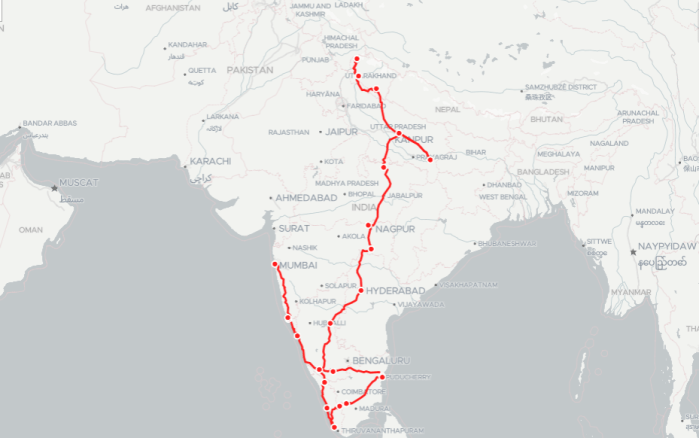
After having already traveled just shy of 10 grand in kilometers, what was another two thousand? But the reality was that the journey was starting to feel insurmountable, and impossible in my predicament. Not only would I have to ride non-stop for four days, but all shops, hotels, motels, and anywhere with a bed would be closed, especially to foreigners.I might be able to get by on dried fruit, and raw vegetables which I could stock up on, and make occasional roadside stops at the mandis for produce, but in some states even these were banned. The highways would be deserted of course, which would mean swift expedited travel, less risk of road danger, and the kind of journey most motorcycle enthusiasts dream of, an ironic plus. But the open road would be dotted by hundreds of interrogation points where I would have to kill the bike, present my obligatory documentation to flanks of masked police wielding bamboo canes and hope they would let me pass. The correct forms of which I still lacked, and my trust in undisturbed passage home I steeply doubted.
I started to hear horror stories and rumors from other backpackers, with some of it backed up by The India Times of forced quarantine in Bombay or being held en route through another country as foreigners transited around the world on repatriation missions. I took these downloads of information with a heavy dose of salt, until what remained was only raw fact. In these times I was weary of opinionated individuals and biased articles claiming to suggest authority over the situation. In the modern age everyone had a platform to pose their voice, and sifting through the tremendous amount of fake news, fear-mongering, and amateur journalism to sieve out the shit that came with it was exhausting and demoralizing. I chose my reputable sources to follow and stuck with them, refraining from deviation down rabbit holes and dreary politics. No matter how you cut the meat, my situation was still flogged with danger, distress, and diversion, yet it was hard to experience any of this direct hardship right now while I remained hunkered down in room 106 of the Thira hostel.
I had a private room, a working ceiling fan, a water tank that permitted five hot minute showers, my own western toilet with a geyser, and two mirrors, it was better than spartan, but not luxury, and I was overall content with my lodging. A door 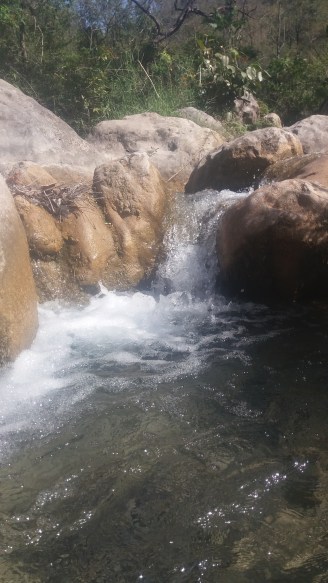 opened on one side of the building on the second story where a narrow ledge hung over the terrace of another roof. If I sat in my bed reclined against the headboard at just the right angle, with both windows open and door ajar, I could see a sliver of the Tehri Garwal mountains that cradled Rishikesh in it’s bosom, while the milky colored Ganges lulled by, sailed only now by the large salmon, and water striders.
Under hard times, the people around you begin to peel apart to reveal their core, like so many layers of an onion in the sun. What remains at the middle is always the most intriguing and speculous of the individual, and it was already apparent how 21 days in confinement were itching at the souls and cracking open the minds of those I remained with. Some went further into vice, with bad diet practices, excessive weed smoking, and depressive hermetic behavior, while others chose to man up and accept the new paradigms, manifest opportunities for collaboration and communal council, and bolster new ways to inspire under the strained lifestyles we found ourselves under. The last bunch simply waited it out. They missed no one, held no attachments to home, and held convictions free of complaint and worry. They were like mycelia dormant in the ground, waiting for the right provocation to invigorate their surfacing.
A Scottsman I knew said his embassy would not send planes to rescue them back to the United Kingdom. I almost never saw him between his morning forays and his reclusive nature, but I understood it being a northerner myself, personal space prevailed even in an intimate country like India. Two Brazilians made agreements through their channels to flee the country via Delhi, which involved a long winded process of hardcore bureaucracy, permission slips, screenings in New Delhi, and overpriced private taxis to chauffeur them six hours to somewhere where it would all come together. I started to notice several of the travelers pairing up when they came to the realization they may be here awhile. An Israeli riding a Thunderbird, with an unmistakable identity flaunted with a woman from Turkey. He chose to stay despite the large scale effort of Israel to return their citizens back to the homeland. They were like two deer in a field to my eyes, and their romantic saga, at least from the vantage point I could see fun to watch. They were both so peculiar in their mating games, I often felt I could probably learn a few tricks from them. The Uruguayan was constantly working out, or doing yoga, or capoeira, or chi gong. But his active warrior behavior belayed a gentle, even effeminate nature, and I saw him swoon in the presence of any woman.
An Indian cyclist who has been to Ladakh and back told me about his project to develop a nature based curriculum for school kids. He wore a uniform of sleeveless tanks, and jogger shorts and always looked like he had just finished a marathon, and he ate like it too. I have never met an individual with such a strong hold on their personal fitness that could eat eight sandwiches in one sitting. Another young Indian named Shiva loitered on the roof from dawn to dusk telling far-flung stories of his nefarious youth, and gave lectures on Indian culture, history and politics. He could easily be a university teacher on a prestigious campus, where I think he would have many fans.
A new arrival from Venezuela shared his setbacks with me as we sipped a cappucino on the steps of the brewmaster’s coffee house. From 7-12 it was permitted to visit the food stalls, while a few shops operated incognito. I intended to take full advantage of this time to partake in some nostalgia time passing, and the morning caffeine installments were good ways to perk up my mood. Then I had my sandwich stolen by a donkey, as he deftly nipped it from out of my hands, but at least the croissant was good.
A few dusty ragged street children pulled at my heartstrings, then at my pockets. I thought of my teenage brother in this instant, though they were significantly younger, all my significant memories of him were made in his youth, and the likeness of children in any country I have traveled tended to wear me through the ringer of reminiscence and rapport more easily. They begged for rupees, and I could see they genuinely needed it. No mother or father followed them, but I figured they were siblings. I peeled away two 10 rupee bills, and handed them to the little girl as she promptly shut her fist around the notes and walked off. It was meant for them to share but she refused to split the difference with her brother. The little boy looked devastated and I wished I had given more, as he held his thin arm forwards with caked lips and sorry puppy eyes. Another south American man standing with us opened his wallet and passed 100 rupees to the boy. I had no idea where this money would go, and it was realistically possible it would be wasted on sweets, but I later saw him wearing a half smile carrying a big loaf of white bread, while his sister flocked around him, the new bearer of wealth and resource.
The young Venezuelan has been a trip agent for the last couple of years, operating primarily without a bank account, he carried all his currency in hard cash. I knew what that was like, and I admired his ability to travel in a more archaic fashion. While in Delhi he received the shattering news that two of the Mexican women who were arranged to fly into India and meet him had a change of heart, from fear of the corona virus. They would no longer leave from Mexico, and he suffered the empty pockets from the bitter deal. Now he was struggling with taxes, and without any means of income. Despite his rotten luck he belayed not a shred of dismay, and was maybe one of the most jovial south Americans I’ve had the fortune to meet. There was the Russian folk dancer who taught chi-gong on the side. She made a homemade video for the Russian news and sent numerous contacts to her embassy in attempts to return via Moscow to her rural village to no avail. Flight prices were extortionate, and conditions there were even more draconian and medieval than India. Eventually she saddled up with her new fate in India, though still wondering how long it could go on for. The Armenian gent, and my Colombian lady friend were not being accepted by their own country, and even she seemed more remote and distant like my native home. No more stories about wild woman archetypes and nature documentaries after dark. Sigh, you can’t win them all, and there was more fish in the sea. Though that sea started to look more like a pond, as the encounters with the feminine dwindled over the time of curfew, and social distancing made it altogether impossible to get too close to them.
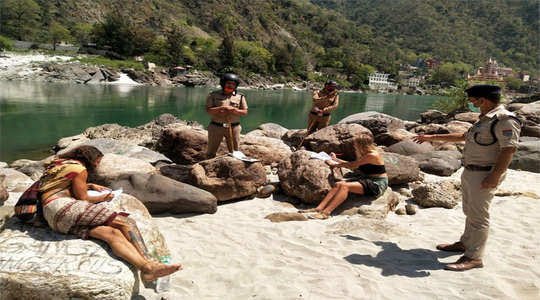
Even Rishikesh was clenching down on curfew notices. A band of ten backpackers made the news when they were found just chilling on the beach in groups. The police were obviously exercising their authority, and made them write “I am sorry for not following curfew” 500 times on the spot. Better than a caning I thought. I always went alone to the beach, and only during the allotted hours for public presence.
As for me, I had already watched two plans go belly up as my original fly with Air India floundered, and its successor with Air Canada got nipped in the bud before it could even leave the ground. There was nothing to do but wait until the last days lockdown had been snuffed out, and international airways were opened again. It was ironic to think of the cloudbursts that major airlines created as the criss crossed the globe as established routes at all, but we were living in the 21st century and behaving like it was the 22nd, and even the skies were owned and controlled. April the 15th would be the golden date of my escape. I admit that I put all my eggs in one basket, and perhaps more than just eggs. I invested a stilted dose of emotional anticipation towards life post curfew, and already saw the myth being rendered down into one last experience of India. The last transmissions of my journal would be filled with tall tales of how I outran the cops through state borders, drove nonstop for 24 hours at a time through desert flatland and slum sprawl, and slept outside in my hammock incognito before I delivered the bike back to Harsh and Akash, and hustled a private tuk tuk to whisk me away to the big steel birds that would carry me home sweet home.
Riding high on my expectations after making the appointed telephone calls, I was able to secure a flight from Mumbai, via Oman and Germany to take me back to Canada. My ticket arrived by email, and I had my booking reservation. It seemed legit to me, and I held a silent pride as I shared the good news with some fellow travelers. Some of them had been through Oman in passing or stayed awhile in the country and promised they had a great reception to foreigners. I didn’t know how much of that I could lean on during a world pandemic, when just having white skin made you a plague carrier, but Oman seemed polished and wealthy on the surface, and I never read anything bad about them before so I held my tongue, and hoped for a bog standard decent time.
A new golden date surfaced, but this time I wanted to back it up with some firepower. So I put out some feelers to the high Canadian consulate in New Delhi, and with the right combinations of words, framed in a way that would suggest my real questions, I managed to gather momentum on getting travel authorization to permit me and motorcyle in getting to the other side of the country. I needed a lot of information; my local indian sim card number, the make and model of the bike with vehicle plate number, the address that matched the legal residence of the hostel, for which I had the c-form to back it up, the obligatory passport no. and date of birth, my arrival date in India, and final destination, a partial itinerary of the route I intended to take, how many days I would need to complete it, the airline I booked, for which dates, and which countries I would transit through back to Canada. In this case my first flight would take me to Muscat in Oman, where I would have sixteen hours to experience a slice of the middle east from the sanctum of the airport. Omar Air would carry me onwards to Frankfurt, where I once had an Indian coffee, and nearly missed my flight to Cancun. Then Air Canada would scoop me up for a trans-atlantic voyage back to Montreal. I would lose nine and a half hours going east and would still need to catch a train to Kingston, before hailing a lift back into the country where a tiny camper trailer in the woods awaited me for a mandatory two week self-isolation. Sheltering in place would be the easy part, it was the grand tour back to the western world, and closing the loop in India amidst a new strict regime that jerked most at my sense of tranquility.
Something I learned as the idle hours of days washed in and out of my non-existent adventure was how content I could really be doing less and living with next to nothing. I still had more or less the same pack up as in the start of the trip, plus a hammock which I didn’t use, and in my saddlebags; a roll of sinew for fixing my clothes, my military laptop, a couple motorcycle tools, a miniature copy of the Jungle Book, a camera with a dead charge, one copper flask and a hot thermos, a wooden bowl and spoon and a clay mug. I carried a small apothecary of essential oils, and some masculine hygiene items. In the afternoons when the temps could summit at 40c, we played cards, crazy eights or bullshit, on the dining table in the basement. The roof was always a moot point at night, when we gathered to snack, stargaze, or engage in harmless flytting of one another, taking the wind out of each other’s sails and keeping the atmosphere light and the tensions cleared.
Perhaps spurred by boredom or some unknown repressed fetish, one evening several of the guys in the hostel borrowed the woman’s clothing and makeup for a drag runway show, a feminist’s dream. I was not privy to this but was later invited to the roof for homemade tira misu, and chai. George Harrison played over the speakers as they smoked grass and lazed about. It wasn’t really my scene, and I preferred to lay back to watch the constellations in the Asian sky, while I made deep dives into mental fantasy, and conscious excavations of my psyche. I confirmed to myself that I might be a slight too antiquated for hostel culture, and the philosophy of young twenty somethings was not my cup of coffee. I more easily imagined myself roughing it in a tent by a camp fire.
Another apotheosis was breaking down and percolating through me, that I was less a spiritual person than I imagined. The more I took stock of the last seven years of travel, it was first and foremost the material world which elevated my state of consciousness and my sense of connection to something supreme, or bigger than me. In India I had dabbled with many new age and ancient healing modalities, and a buffet of spiritual tactics; I did mantra, tantra, yantra, and chanting. I meditated, bent my body into contortions with yoga, went to sound healing and singing circles on the beach, and made room for gurus and pundits to teach my the secrets of the universe. But this all felt rather foreign and illusionary to me, and besides was all rooted in the material world. It was too exotic and intricate for a country guy like me. None of these tactics ever got me as high as eating a well cooked meal amongst my kin, or shouldering a pack and hiking a rugged mountain to survey the landscape. It didn’t beat the chemical release of falling in love, or unbridled sexual passion after dark or out of doors. It stood no ground against the sweet or soulful strains of acoustic music enjoyed with friends or a live performance. And it cut no salt when it came global adventures, or the simple domestic routines of life in your backyard, where home was best. I reached higher states of meditation while fishing on quiet lakes and rivers, and experienced more complete healing through foraging seasonal plants or gathering seafood from the beach. The forests, cliffs, fjords, and waterfalls were my therapy, the animals my counselors, bringing me in-line with the columnar axis of myself and the world, and I found that the great spiritual allegories were all to be found in the real life nature of the material world. One look at a gorgeous stranger could send my heart soaring 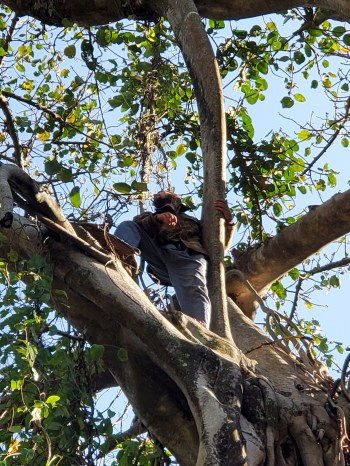 for an entire day, but it was my two eyes, not my third that noticed them and their physical beauty which exited me, nothing spiritual. I cared not to transcend or leave my human shell and strived to keep myself here as long and healthy as possible. I found that Eden was actually here on this terra mata, not in a celestial planet governed by benevolent angels. I liked it here, and preferred my Canadian passport over one permitting higher frequency adventures. In this conviction there was everything I needed, from the lookouts of nature’s skull to the salty blood of sea. Perhaps that was why people had said I carried the earth with me, that I was always grounded and connected to nature. Because I never created the separation in the first place between the gifts of the spirit, and the ability for the human being to attain them right where we stood. I preferred the hunger, and the reaping over good vibes, and positive intentions. The crows, pine trees, and squirrels were just as holy as all the Gods put together, ’nuff said.
72 hours after booking my flight to Oman, a new announcement was made by P.M. Modi that the world’s largest lock down would extend until at least the end of the month in an unprecedented move with zero warning that would send more ripples into the poverty stricken population of India’s less opulent, and have catastrophic effects on the agrarian cycles of migrant workers. People were getting disturbed, and pissed of, while several thousand of the peasant workers boldly claimed they would walk the 150 miles back to their home villages to resume work, thousands more crossed borders and held religious gatherings and claimed the Allah would protect them from illness and disease, several of them later contracted corona and died.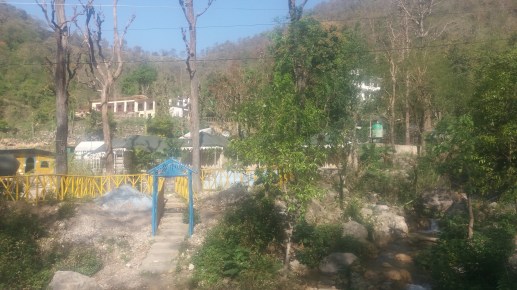
The surreal nature of this brave new world was swelling vice and violence, and tensions were teeming over like steam in a pressure cooker. Air traffic was once again halted which meant I would be crossing no seas in giant metal birds anytime soon. The country would be divided into color coded regions like traffic lights and managed forthright with varying degrees of discipline on public service offerings. Red zones being those hotspots, mainly urban areas and densely affected zone likes Karnataka, Bangalore, New Delhi and Bombay, would remain in full lockdown, with empty deserted streets and imposed indoor policies. Food would be permitted to be purchased directly at the farms, while even food trolleys, called mandis in India, would not be permitted. How practical or realistic it would be for cities with tens of millions to visit farms for their dinner ingredients I knew not. Green states would slowly stagger openings of business, domestic travel would gradually becoming accessible, and non-essential services would be free to carry on. I might be hunkering down for at least another fort-night, so I thought of a few more ways I might be able to fortify my routine.
Maybe I could learn a thing or two about the local plants around here from the  women who cut and baled the chaff for their holy cows. I was missing out on a lot of food I was used to eating. Leafy greens were spare at the vegetable tables, while meat and fish were nowhere to be found. I was finding new tactics to stay fit and spice up my day, since I couldn’t free range in the afternoon. I interacted more with the animals in the morning, did max out sets of pushups in my room until I could no longer hold plank, practiced various physical games on the roof with the guys, and ran the four flights of stairs throughout the course of my waking hours. I started taking cold showers to shake off the dross of fatigue, and temper my body to be more resilient to stress. I took proportionately more time alone to do the things that really carried any meaning with me, even if it did make me a hermit sometimes.
Some take-aways from this waking change in the world was that our species were still the number one purveyor of increasingly bizarre and sophisticated ironies and problems in the world. Somehow coping with our vulnerabilites meant building protective bubbles around us, and becoming even more sedentary and less capable humans. My own diagnosis was that in these rare and precarious times, those minor percentage of individuals who felt born into roles as natural community leaders would buck up and take accountability to provide, preside and protect those overwhelming percentage who belonged to the herd, who serviced no other prevailing paradigms on life than those offered by the hive mind. The truth of the matter was, life is damn hard to survive, and when the world’s health was gambled at the behest of communal freedoms, survival was not good enough, we still needed to thrive as a human animal and as a culture. Because corona viruses, scarcity of resources and medicine, and human ills would not just disappear. Perhaps you already know what that looks like for you, and will come out of the fray as a more stout and capable person, or maybe for the rest, artificial intelligence and bio-technology will make our species immortal.
For me, the distillation of my life’s work and worth was based in part on it’s ephemerality and I lived already with an acute degree of danger. Several times I pondered writing an “if it ended tomorrow” epilogue style post. There were countless times while the motor was running down a dodgy Indian freeway when I felt far more at risk for my life, than contracting a novel flu like virus that could potentially kill me, along with a grab bag of other edgy behaviors that didn’t exactly ensure easy self-preservation or insurance against harm. But these were always carefully manipulated risks that yielded rich fruits, which in turn cultivated the more refined senses and endurance to withstand suffering, hardship, broken hearts, and compromised health states in my nearly thirty years. I admit I was working on aspects of deeper self preservation if I were to have a family and take another wife. But as many times as I thought of writing my ‘in case of emergency’ transmission, it would always end the same, that it was all so so good.

 the motorcycle mantras
This adventure of yours is beautiful. I enjoyed your thoughts, on your observations, the connecting with trees, squirrels and clmbing mountains..thank you for sharing so much of your journey.
Love, light and blessings.
Marilyn
LikeLike