The naturalness of the 300km between Nainital and Rishikesh, it felt a lot more like the elder Asia I had seen in film documentaries. Extensive tracts of terraces shaped from the steeply sloping land for agriculture use, a hundred shade blanket of greens, and limitless views of the far flung horizon. It was a riders paradise nitched into north Uttrakhand with Gods own knuckled artistry. There was space for the thoughts to grow, and shelter for the soul to steep in. I rumbled along on the motorcycle, hugging the gentle curves of the lush alpine roads and breathed deep draughts of freedom into my being. The air was like sweet cologne, and the spring water that tripped down the mountains picked up flavors of peaty ale, and medicinal minerals. Working overtime on the bike paid off handsomely, and here I could really soak in the essence of ridge riding, which nosed me into secret valleys and off into high altitude plateau towns. I was surprised to see cannabis staking its claim in abundance by the roadside, literally flourishing as a weed in ditches, on garden borders, and behind every household, school, and roadhouse eatery. It grew as common as nettle or dandelion in the west. It lightly scented the air as its oils vaporized in the stark high noontide. I gathered a few bush roses that filled a hollow near a petrol pump, and a few stems of the marijuana leaf to place behind my dashboard windshield. It added an artistic flare to the decoration of my already adorned bike, and I liked to carry some of the local flora with me for later road offerings.


I followed the Cheena canal road from Haridwar along the skirted edge of the Rajaji national park. The water was crisp and cold as I brought drops of it to my forehead, and watched the passibely flowing aqua blue water of the Ganges, closer to the Himalayan source. A stand of thatched huts were clustered near the canal, a women milked her cow, and the family laundry dried on leaf deprived bushes in the sun. Like a picture set back in time 400 years, hearkening to a simple, easier pioneer lifestyle. My imagination ran wild with fancy ideas of any potential encounters, how their village folk may receive a foreigner if I were to stop in. Would they be a private people unconcerned with guests? Or would they integrate me into their daily routine, and have me watch over the goats each afternoon? I could take that side road and change what this trip was about right here. Join their family, build a hut of my own and stay awhile, but maybe this was just willful ignorance, I would not thrive there and they would probably grow tired of me, so I kept the motor running and grinned on the image in my mind it created.
I never thought I would have the luck to see Rishikesh as early as my 20’s. Some people remember it as the place of pilgrimage where the Beatles learned transcendental meditation from Maharishi Mahesh, at an ashram opposite the banks of Ram Jula. Hippies and Bohemian travelers come here to train in yoga, find their Guru, and revel in the sights and sounds breaching the cleaner Ganges water. Orange robed Babas with matted dreadlocks sit on the steps or down at the Ganga’s edge drinking chai, smoking chillums and eating chapattis. Bordering Tapovan and the core of Rishikesh are dense forest jungle where the wildlife share frontier space with the outer village compounds. Crossed by the Laxman Jhula and Ram Jula suspension bridges, where monkeys and even stray cows use the narrow walk for transit between the two sides. Rishikesh was under construction, and the main road leading into Tapovan was a thick cloud of dust that coated my riding clothes in a gritty layer of gray. A barage of heavy machinery drilled, cut, and spit out large bites of the asphalt and gathered it into pyramids of broken industrial ruin. The deafening strain of beeping horns, traffic whistles, generators and jackhammers could have been at the urban heart of any metropolis from Toronto to Shanghai. The alley way leading up to the hostel was missing a four foot section of pavement that was all but chewed away from the joining road by a riddle of steel tools. I took a secondary route up a steep banking medina through the private property of a spiritual school, then coasted back down the street I was supposed to take from the backside, happy to find that the hostel had private parking inside a gate that was locked at night. A few obligatory questions and answers were put out of the way, and I roosted into a private room, where I checked for hot water, and tumbled onto the bed which even had a headboard. The facilities were up to my par, and I happily handed off some rupee notes to secure a few sleeps and the complimentary breakfast board.
As per protocol, I sunk in slowly during the first day in a new city lest I be swallowed up by misgivings, and the local hustle. I did no shopping or touring, and resigned myself to feeling out where I had just landed and get my bearings. There was nothing better I could do than meet each place with an opening to the novelty it wagered, and tried to practice being in the moment. For the backpacker, Rishikesh had couched a western world into the middle of an Indian society. Americana style coffee houses, vegan resto bars, organic markets, pastry shops and book collectors were shoulder to shoulder with tour companies, booking agencies, general stores, and street food wallahs. The social environment felt fun, electrifying and vibrant and the bazaar peddled everything one could need or desire with a quality stock of India’s finest wares and handcraft. Cork and copper products filled every third shop, there was wool winter clothing woven by Himalayan villagers, bodily adornments in silvers and golds packed into glass cases, an old coin dealer displayed his collection on a rolling trolley, a grocery of juicy fruits and fresh vegetables laid out on burlap sacks, and walls were plastered with posters of spiritual offerings, and new age healing modalities. I walked the main road in Tapovan and couldn’t find a working atm, so I resorted to paying the foreign exchange tax of 5% to a man selling diamonds in an air conditioned showroom.
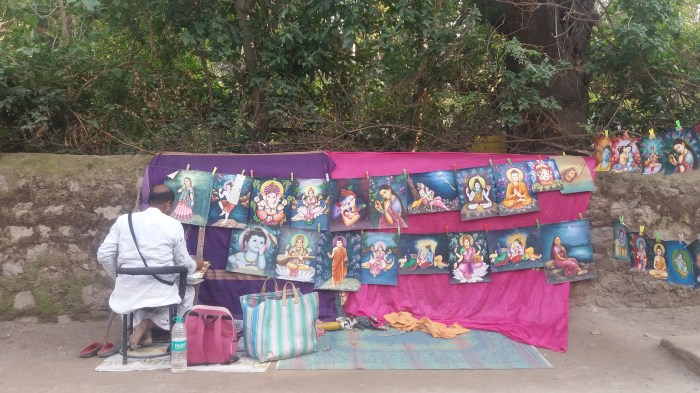
My beard was starting to get stubbly so I sought out a barber for an old fashioned straight razor shave. He did my side cuts and left me looking a bit more gentleman, and a little less savage. I was more than happy to couch myself into the leather barber chair and relax at the end of a hard day. I slept like a log, and started the next morning listening to country music while I sipped strong cowboy coffee in my room. I worked out on Ganga beach and drifted from one place to another without any real aim. The women were beautiful here, and there were all kinds here, though I had all but resigned myself from the pursuit. It felt a little late in the game, and on the contrast was enjoying a deeper affinity of my private manhood. All my Canadian creature comforts started to leak back into my daily routine, and my impending homecoming felt a lot nearer now, as I rounded the bend of my last 21 days in India.

There was a growing concern worldwide with a new virus that was spreading like the plague called corona, and I was bemused to find out that my flight to Germany had been canceled without notification. So the better part of my first two fulls days in Rishikesh were spent on the phone trying to get the attention of someone at the flight company to change my booking, or refund my trip and let me build a new itinerary in its place. I bided my time at an espresso bar that seemed dimly inspired by Starbucks or some New York coffee house only a little more tasteful and in a language I could understand. Old 50’s vintage style signs of Harley Davidsons and Indian roadsters hung on the walls, and leather couches made the place feel more like a living room. I sat through two rounds of caffeine, and pastries meanwhile waiting on hold with airline agents as three hours whiled away and I was able to rebook a flight from Canada to Montreal via England for April the eighth. New mandates and government ordered regulations were being put into place, and the political climate was changing on the hour. Everything was shutting down including schools, museums, tourist destinations, restaurants and public venues. Through the mounting travel restrictions, border closings, and disease eruptions on the European continent I couldn’t help but feel that my plans were all but tentative and symbolic.
Several friends of mine made along the way had opted for a quick retreat from their holidays and snowbirds were returning back home from their tropical destinations. At least it wasn’t in the middle of winter, and a spring arrival held keen promise of safe return to the homeland. Under the circumstances I felt pretty cool and level headed, and I couldn’t allow fear and panic to embitter the remaining experiences that had been chalked up for me in India. I felt instead an increased sense of maturity and response to the situation and treated it hardly different than making important life decisions. There was a lot of panic and bullsh*t going around, but my tools of discernment and skepticism were sharpened on the smith’s whetstone, and I cut through a lot of the media and hysteria with a conscious attention to the science and the facts of the matter at hand. It was affecting me in both direct and and indirect ways, but between the two I could mend a solution to my safe passage home. Where there is a wolf there is a way, an old friend from Virginia once told me.
As I let the new covid threat smoulder on the backburner of my conscience, my days were peppered with new experiences of random encounters with strangers, lucky coincidences, and a lackadaisical acceptance of the brave new world we were living in. In the waning hours of my third evening, I ventured out beyond the cash traps and distractions of Tapovan to seek a little refuge and catharsis from civilization into the a wilder setting of natural accoutrements. I tried to visit the famous Beatles ashram, but the gates were barred, and the ashram was all but in ruins. Street artists had muralled the crumbling walls with paintings of bearded babas, birds, and geometric mandalas. Though I could not view the art with my own two eyes, I’ve included a few photos from public sources for the readers. An unexpected walk led me trailing up the safari road into Rajaji reserve on foot.


Sometimes they are the spontaneous adventures that yield the richest gifts. As I left the ashram behind for the jungle I caught a gaze with an orange cloak renunciate sitting on a flat boulder eating clumps of sweet jaggery, who pointed past me into the thicket of broadleaf trees. I turned my attention to the sylvan shelter and with my own two eyes met those of a giant bull elephant only ten yards from where I now stood. I was arrested in complete awe and finality of the moment that seemed to float in space for several minutes. I had seen elephants in the zoo when I was a kid, and I was not the kind of traveler to take guided jeep tours in search of wildlife, but I had never glimpsed this giant social nomad in it’s natural habitat. I believed if the wild things wanted to reveal themselves to me, they would on their own time. Now barely a stones throw away I stood on the same earth as this male pachyderm, as it ripped the leafy vegetation from a low branch in front of me and chewed the fibrous mass with its muscular tongue. Two ivory tusks curled to the skies like the prow of a viking ship, while its erect trunk held a timber aloft before braking it in two. It was un-threatened by my presence and likewise I felt peaceable in its dominating company. There is a powerfully ancient energy that elephants radiate, their raw bestial nature can rumble like thunder and lead them to destroy large tracts of forest, and underneath this their loyalty to family and gentle roaming nature brings them in balance with the wilderness. It was a privilege to glimpse this behemoth on my own terms, and I didn’t have to pay a single cent for the experience. Two men on a scooter passed by and noticed my fixed stare on the elephant. They parked ahead of me, and one of the men climbed onto a log clapping his hand and shouted ‘bah, bah’, which the great grey goliath spooked at and crashed further into the background of the jungle. The obtuse action of this Indian man felt unnecessary, and provoked by fear. I’ve always felt that animals can sense this on a person, and can smell the pheromones we give off when we are afraid, prompting them to fight or flight. My private moment with the elephant was over as others appeared from the woodwork, and tried to rouse its attention or else see it from the relative security of the roof of their cars.
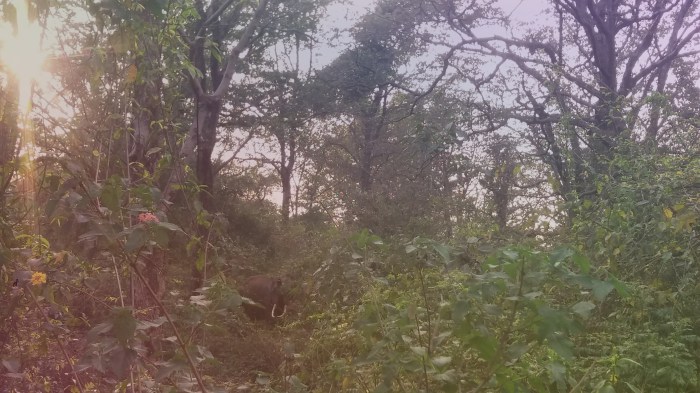
An older lady from Norway and a middle aged woman from Sweden struck up a chat, and I found out that the Swede had made a picture about elephants and won a prize for the best documentary at the Rishikesh film festival. The Norse woman shared a few stories about her life in Trondheim, and I recalled some travels of my time in the Nordic lands. I liked them right away and they joined me for a walk as we tramped up the road a little further fleeing the crowd. Here we sighted a flock of hornbills high in the canopy, a hefty tropical sporting a huge mustard colored beak with its distinguishable knob between the eyes. Minutes later, three large soil colored deer with strong features and dark eyes. I always held a fondness for the Deer, and the whitetails at home were a marked feature of my upbringing. I bowed my head to this grazer of the heath, as it gave me a stern affirming look of acceptance. The sun had by now retreated behind the jungle, and it felt like a good time to make a retreat lest I be seen as fair game for some of the hunters here.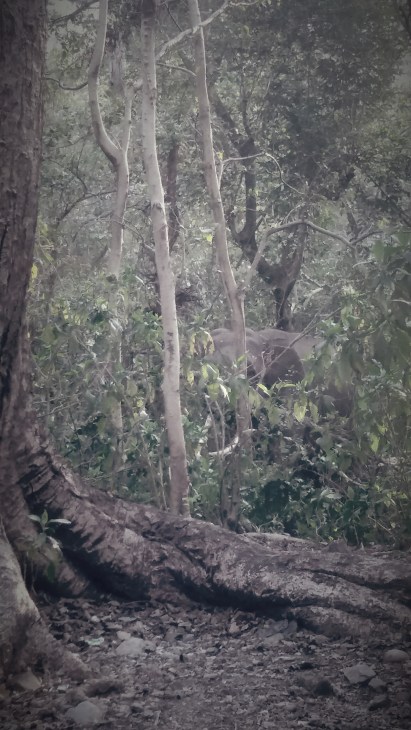 Tigers and leopards also roamed these greens, and I did notice the bones of large fauna lying in the gravel with petrified skin dried to their bones. My instincts for self preservation were largely cultivated in wild spaces like this. On the walk back I could hear the mewing of peacocks in all directions, and a few black faced monkeys scampered above head. The liminal times of dusk awakened a flurry of action in the forest, as the diurnal creatures vied for the safety of their dens, caves and shelters while the nocturnals came out from hiding, and prowled for dinner. The menu was a free game of insects and rodents up to domestic cattle, dogs and herbivorous mammals, and I was not off the table for the Bengali tigers.
Before my jungle book safari was finished I spotted two black foxes in the village just beyond a stone walled garden, lurking in the deeper shades of teak trees presumably hungry as was I. Such abundant wildlife thriving amidst a city with a population greater than one lakh (100,000). Had they all come out to greet me near the end of my trip, or was I just in the right place at the right time? Either possibility was a comfortable reality to live in. I was joined for dinner by the two women from Norway and Sweden, and we dined at Cafe Delmar, a.k.a. the Beatles restaurant above the night lit river.
The next day I returned to Rajaji with my newly found comrade from Boston, a young man named Jamal who worked several years in the medical field, and was in search of a monastic life in southern Asia. His cool headed temperament in the midst of misery that the rest of the world was experience was a grounding post for our friendship, and I knew right away we would get on handsomely. We walked quite far into the reserve for a couple of hours and were greeted with the trumpeting bellows of another wheezing elephant. We follow a dried up stream bed and bush bashed our way into thicker vegetation where I thought we may be able to find a back entrance to the ashram ruins. All the sounds of the forest were more intense, as we made ourselves a lot more vulnerable to ambush and surprise. When we came to the where the dry channel met a blaze trailed, we chose to fork back towards the Ganges in the direction of the Beatles heritage site, but were met with a grim scene that caught us both starkly off guard, and I had to swallow my grace in the sight of it. I had heard that only a week before that a Baba had been run down by an elephant, and it is true that some of them lived out here in a secret cave. What I did not expect was the prospect of finding a suicide in such a serene place. Before us now was a band of faded cloth hanging from a tree still heavy with the beheaded skull of a man. The rest of the body was presumably eaten by carnivores, and only the small bones of the neck and leatherized skin of the face remained while the teeth protruded out from the jaw and his scalp held patches of black hair. The public cremations in Varanasi felt mild in contrast to the brutality of the scene that we know acknowledged, and I spent the next three hours of our hike trying to un-see this image from my mind.
We did eventually throw off the dread that came with this morbid sight, and met some friendly water buffalo and languors on our trail, that fed out of my hand and nuzzled noses with me like more primal kin. Back in town we feasted at the Little Buddha, and ate a platter of food fit for a King; sweet potatoes, steamed pumpkin, garlic bread with yak cheese, chappatis, fresh salad, and small pots of pesto, tahini and baba ganoush, along with a papaya lassi. Jalam offered to cover the bill, then we idled an hour or two in the local book libraries, and I tempted over added more paperweight to my luggage. I visited a tattoo parlor that offered ritual inkwork, and flawless life art, while I feathered through their sketchbook and gallery of past clients work inspired for a piece of my own. I said I would sleep on it, and we exchanged contact information, hopeful about the connection. We capped off our night with a cold dip in the Ganges, leaving me feeling at least twice at vigorous and refreshed, followed up with a strong cup of masala chai served in tall glasses at a tiny roadside stall. The good things were worth waiting for.
In the morning I was taking a motorcycle tour to the northern reaches of Uttrakhand in the highlands close to Himachal Pradesh and China with a local herbalist. We had set to visit a remote village farm and stalk wild plants in the foothills of Kedarkantha. A young girl name Jennie from Germany joined our entourage and vied to ride pillion with me, so we were three adventurists, with two tanks of petrol, and one compass, to the Himalayan snows of India.

 the motorcycle mantras